 Beaudry Mikhail
- Contribution
- Product / design / delivery
- Organization
- SF Mayor’s Office of Innovation
- Status
- Shipped
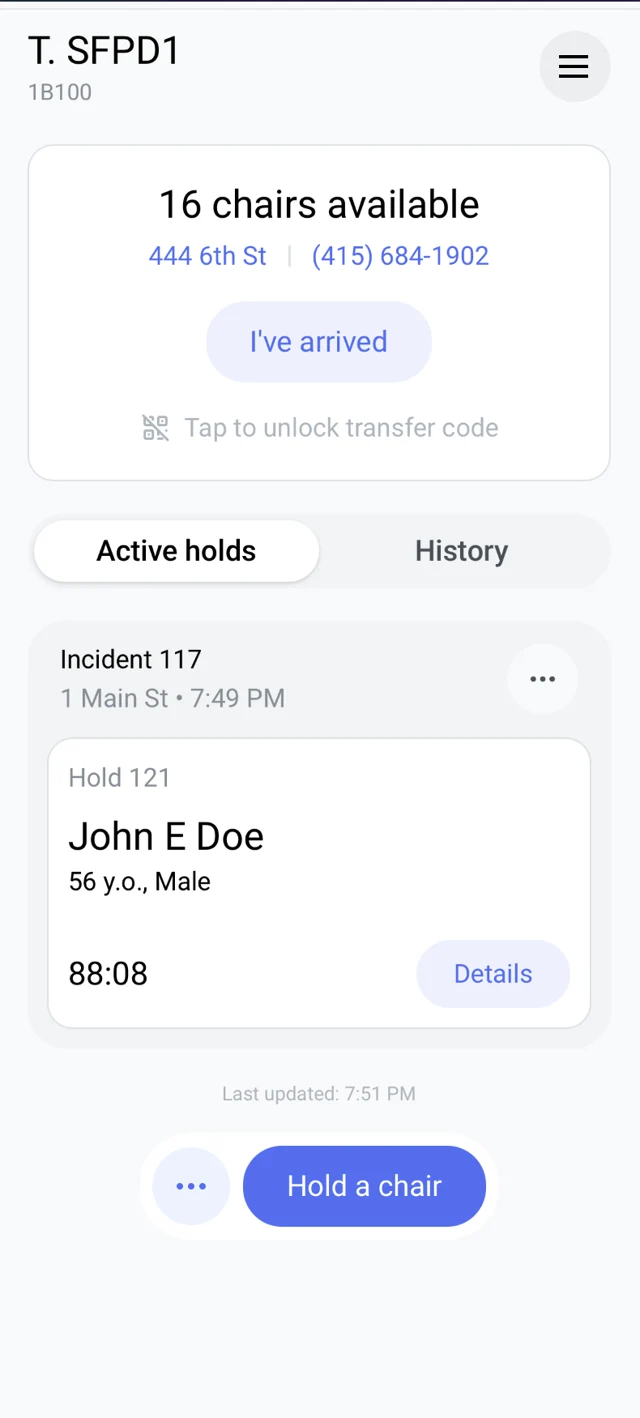
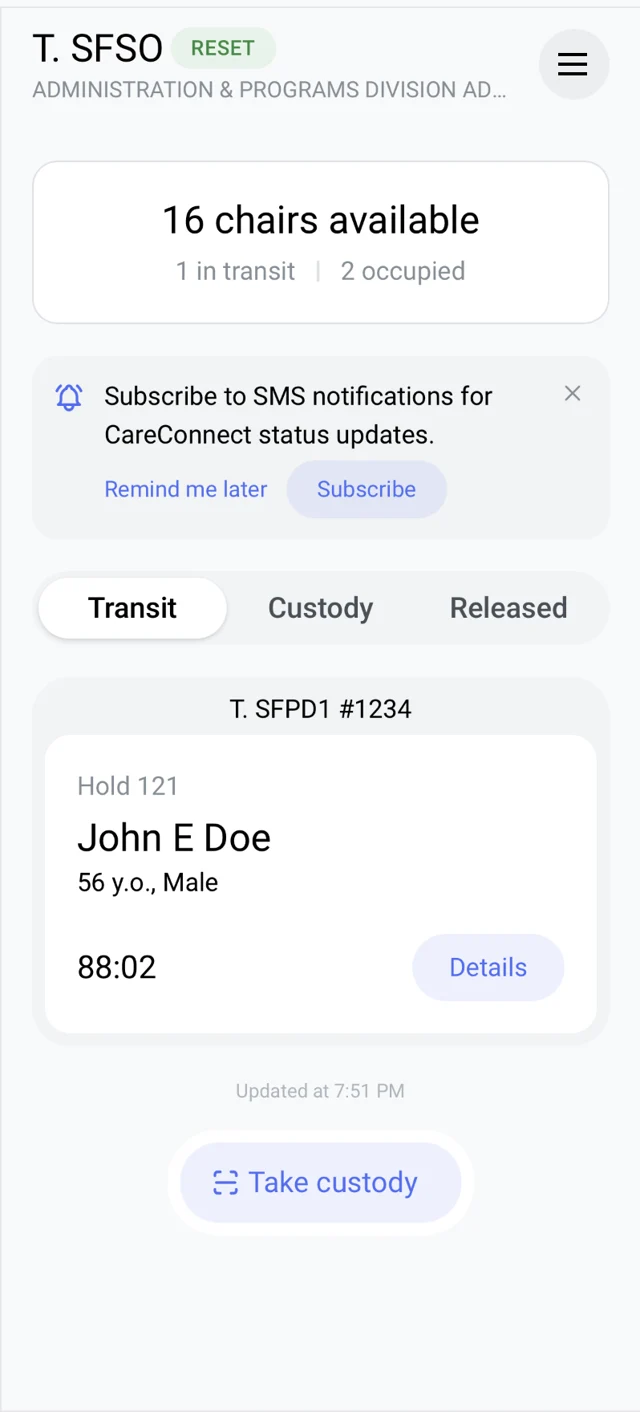
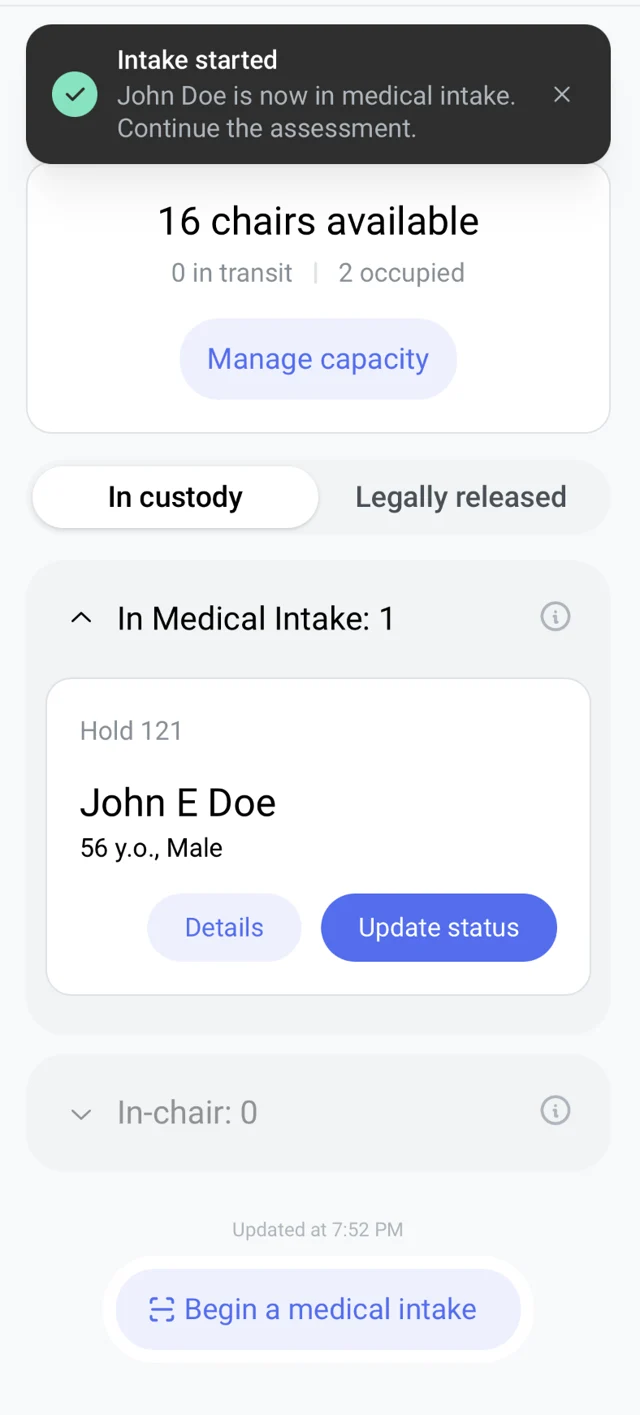
I led development of the CareConnect project, a mobile web application designed to reduce administrative burden for law enforcement and health care staff in diverting opioid addicts into medical respite and so increase the chances that more people received critical care to support their recovery. The app was built from scratch and shipped along with the complex, high profile launch of the RESET center, with extensive use of agentic coding and thoughtful engagement with civic tech volunteers. It is the first human-centered mobile web application built for cross-department law enforcement use, and represents a step change in user experience and code quality for the City of San Francisco.
Deliver a faster, easier handoff to care
In the first week of CareConnect's launch, we watched officers complete handoffs in minutes, as opposed to hours under previous workflows. Officers who expected a complicated system were surprised by how little training they needed and how easy the app was in use.
Those moments reflected months of work across product design, engineering, policy, and operations. Our task was to help police officers, sheriff's deputies, and health staff coordinate at San Francisco's RESET Center, a supervised sobering setting offering an alternative destination to jail or hospital for eligible people arrested for public intoxication.
Value the needs of frontline staff
We user tested extensively and shipped daily. A few weeks into development, we tested a handoff between police officers and deputies. The officers wanted to know whether the information had reached the deputy and whether it was safe for them to leave.
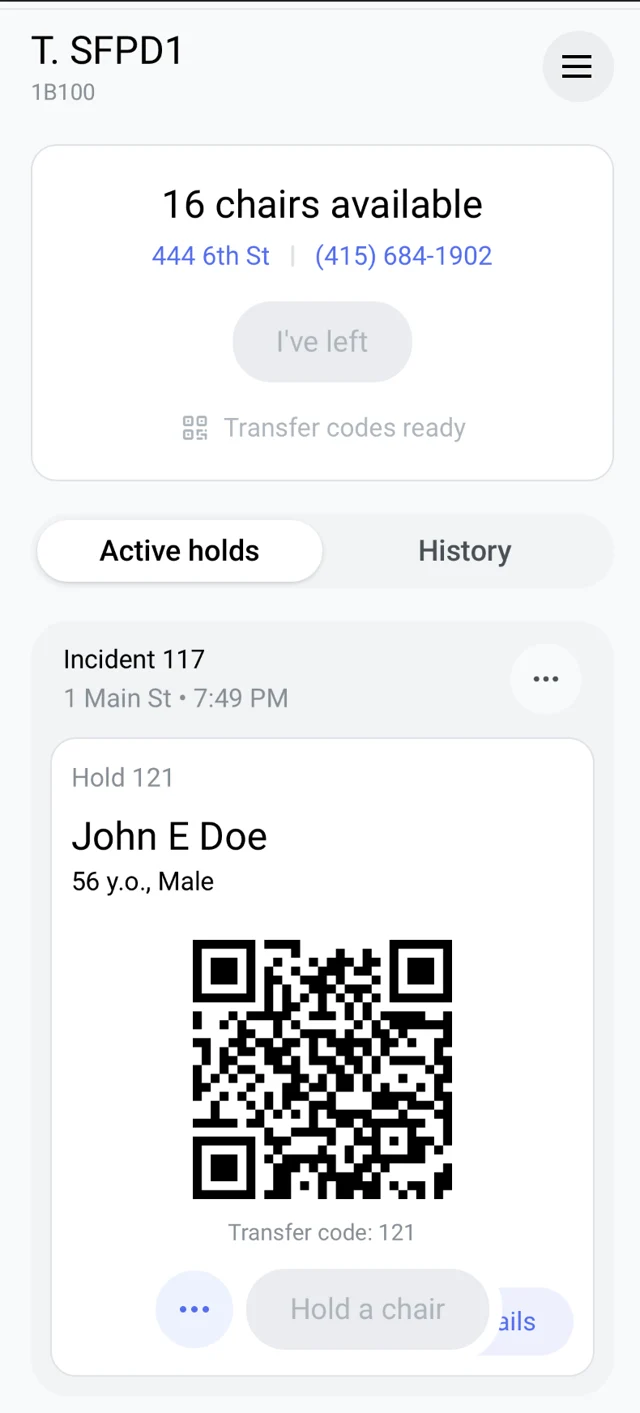
We worked through what made that handoff complete: the deputy needed the person's details and needed to begin a physical safety check. That understanding gave us the basis for the interaction, and emphasized the important of a strong physical action to designate the hand off as complete.
The resulting flow used a physical QR scan action that provided clear confirmation to all parties, making an important legal transition visible and trustworthy.
Protect workflows from administrative burden
The City of San Francisco has a challenging policy-delivery gap. Policies are often developed far from implementation consideration, and launch canbe problematic. To avoid this, I reviewed designs regularly with policy and operational leaders, sharing live demonstrations and incorporating feedback: I wanted implementation and policy to develop together. I clearly and repeatedly communicated the project's north star of reducing administrative burden for frontline users, which helped stakeholders understand the importance of designing the policy to support this outcome.
There were still challenges. Close to launch, proposed legal checks threatened to add substantial work for officers. We worked with the City's legal authorities to clarify the requirement and arrived at more streamlined flows. By listening carefully to stakeholder needs while protecting user needs helped us stay compliant while protecting the app's ease of use.
Just enough AI
While agentic coding was a critical support in the CareConnect project and enabled fast delivery on an intense timeline, the actual use of AI in the application is limited - by design.
We were constrained by strong regulatory controls on PHI and PII, and legislated limits on the use of AI in law enforcement applications. But more importantly, there was simply no compelling user need for a deep integration with AI: users didn't need generative tools or chatbots, they needed simple, streamlined workflows that minimized administrative burden and allowed everyone to focus on the work they were best at.
We made strategic use of AI in certain contexts where the need was clear - such as ID scanning - but otherwise focused on creating the simplest and clearest possible design that would be stable for use in challenging street environments.
Bringing specialist engineering into the product
CareConnect was unique for how deeply engaged volunteer engineers were with a City project. While I managed and directed the product scope, I worked to ensure vetted senior engineers were given freedom to prototype and test new product features. This allowed us to move quickly, harness the creativity and energy of volunteer expertise, while ensuring the end product was consistent with design standards, and tested and vetted.
Alongside specialist and volunteer contributions, I worked on engineering tasks, supervising coding agents and ultimately contributing around 30% of the production code base.
The sustainment mindset
For governments with limited delivery capacity, it is one thing to build new things and quite another to maintain them. Most departments in San Francisco lack product delivery capacity, and law enforcement and healthcare are no exception. An innovation team can build all they want, but without a longer term plan, products will start decaying the moment the team walks away.
We committed deeply to CareConnect from the get-go, and demonstrated it to our partners. For two weeks after launch, I was on site daily with the CareConnect engineering team. We trained officers, checked in with staff, collected feedback, and made live fixes. Even though we were technically in transition at that point, the team continued to ship new features - including an SMS notification tool to keep teams aware of dynamic changes in a stressful environment - and continued to serve as technical backstop to ensure uptime.
Most improtantly, I had a view to the long term: I worked closely with the Sheriff's Office to develop a thoughtful and measured transition plan, partnering with other departments to offer product management capacity building, while ensuring a long tail hand-off with plenty of support to ensure service continuity.
See the workflow
This silent demonstration shows the officer preparing a handoff, the deputy receiving it and recording a safety check, and health staff beginning intake. The three views make the progression of responsibility visible.
Conversation starters
I'm interested in civic tech, AI-forward opportunities in critical infrastructures (transportation, energy, healthcare); and advocacy collaborations and board service opportunities in transportation.
If you're working to make government more capable, companies more effective at delivering sustainable infrastructure, or cities better places to live, reach out.